
What’s the difference between 20 and 30 yard dumpsters
You’re planning a major project and researching dumpster sizes. You’ve narrowed it down to 20 yard or 30 yard dumpster rental—the two most popular residential and light commercial sizes. But what’s the actual difference beyond “10 cubic yards”? More importantly, which one does your project need? The difference: a 30 yard dumpster holds 50% more debris than 20 yard (30 cubic yards versus 20 cubic yards)—equivalent to 9 pickup truck loads versus 6 loads, or debris from renovating 2,500-3,000 square feet versus 1,500-2,000 square feet [SOURCE: Dumpster capacity comparisons]. Physical size difference: 30 yard measures 22 feet × 8 feet × 6 feet versus 20 yard at 22 feet × 8 feet × 4.5 feet—same footprint, 1.5 feet taller (shoulder height versus chest height). Cost difference in Apopka: typically $50-100 premium for 30 yard ($400-500 versus $350-450 for 20 yard). The decision: 20 yard handles most single-room remodels, roofing projects up to 3,500 square feet, and partial house cleanouts; 30 yard is necessary for whole-home renovations, larger roofing projects, full house cleanouts, and major construction or demolition.
This guide answers what’s the difference between 20 and 30 yard dumpsters and explains capacity comparison, cost difference, which projects need each size, and how to choose the right one for your Apopka project.
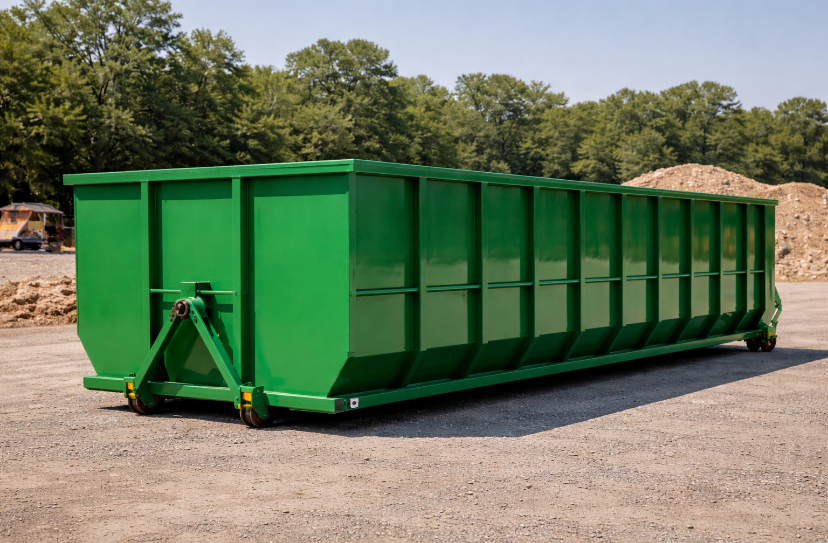
What’s the Difference Between 20 and 30 Yard Dumpsters?
The key differences between 20 and 30 yard dumpsters:
Capacity difference: A 30 yard holds 30 cubic yards (9 pickup truck loads) versus 20 yard holding 20 cubic yards (6 pickup loads)—50% more capacity [SOURCE: Capacity comparisons].
Dimensions: Both have the same 22 feet × 8 feet footprint. The 30 yard is 6 feet high versus 20 yard at 4.5 feet high—30 yard is 1.5 feet taller (shoulder height versus chest height) [SOURCE: Standard dumpster dimensions].
Weight capacity: A 30 yard is typically rated 3-5 tons versus 20 yard at 2-4 tons—handles heavier debris loads [SOURCE: Dumpster weight specifications].
Cost difference: A 30 yard costs $400-500 in Apopka versus 20 yard at $350-450—typically $50-100 premium for 50% more capacity.
When to choose 20 yard: Roofing up to 3,500 square feet, single room remodels (kitchen, bathroom), 2-3 room cleanouts, garage or basement cleanouts, deck removal—projects generating 12-18 cubic yards of debris.
When to choose 30 yard: Whole-home renovations, roofing 4,000+ square feet, full house cleanouts (3-4+ bedrooms), home additions 400+ square feet, major demolition—projects generating 20-28 cubic yards of debris.
Decision tip: If project debris volume is uncertain or pushes 20 yard capacity limits, upgrade to 30 yard—the $50-100 premium is cheaper than a second 20 yard rental ($350-450 additional).
Compare sizes for your project → 30 yard dumpster rental in Apopka.
20 Yard vs. 30 Yard Dumpster: Side-by-Side Comparison
Providing direct side-by-side comparison of key specifications establishes clear understanding of differences in dimensions, capacity, and practical volume.
Physical Dimensions Comparison
Both sizes share the same 22 feet long × 8 feet wide footprint—the same driveway or site space is required for placement. The height difference: 30 yard stands 6 feet tall versus 20 yard at 4.5 feet tall. The 30 yard is 1.5 feet taller, representing a 30% height increase. Visual reference: 20 yard reaches average adult chest height, 30 yard reaches shoulder height. Both are top-loading with sides you can toss debris over. Footprint equivalence means if your property accommodates a 20 yard, it accommodates a 30 yard—height is the only difference.
Capacity and Volume Difference
A 20 yard holds 20 cubic yards, a 30 yard holds 30 cubic yards—10 cubic yard absolute difference representing 50% capacity increase. Pickup truck load equivalent: 20 yard equals 6 full truck loads, 30 yard equals 9 full truck loads (3 additional loads). Room equivalent: 20 yard holds 3-4 bedroom contents, 30 yard holds 5-6 bedroom contents. Renovation equivalent: 20 yard accommodates 1,500-2,000 square feet of debris, 30 yard accommodates 2,500-3,000 square feet of debris. This substantial capacity increase makes 30 yard appropriate for significantly larger projects.
Weight Capacity Comparison
A 20 yard is typically rated 2-4 tons (4,000-8,000 pounds), a 30 yard is typically rated 3-5 tons (6,000-10,000 pounds). The 30 yard provides 1-2 ton additional weight allowance—important for heavier debris such as construction materials, multiple layers of roofing, or mixed debris with some concrete. Both sizes accommodate typical residential debris without weight concerns. Weight matters more for construction and demolition projects with heavier materials. Residential cleanouts and remodels rarely approach weight limits for either size.
Delivery and Placement Considerations
Both require the same footprint space (22×8 feet) plus clearance for the delivery truck. Both need minimum 23 feet overhead clearance for power lines. Both use the same delivery truck—no difference in access requirements. Driveway placement is identical for both sizes. Street placement permits (if required) are the same for both. HOA restrictions typically apply to both or neither. Practical consideration: if you’re concerned about dumpster visual impact (blocking view, neighbor relations), the 30 yard is 1.5 feet taller and slightly more visible, but the footprint is the same—minimal practical difference.
Fill Level and Loading Differences
Both sizes are loaded to the top edge—materials shouldn’t extend above the sides. The 30 yard additional height (1.5 feet) provides more vertical clearance, making loading slightly easier for some items. Taller sides on 30 yard mean a slightly higher toss to load items but still manageable from ground level. Proper loading technique is the same for both: heavy items on bottom, lighter items filling gaps, breaking down bulky items to maximize space. Realistic capacity utilization: both achieve 80-90% efficiency with proper loading.
Cost Difference and Value Analysis: 20 Yard vs. 30 Yard
Addressing cost concerns that prevent many from choosing the appropriate larger size shows the cost difference is modest compared to capacity increase and risk of needing a second rental.
Apopka Pricing Comparison
A 20 yard dumpster costs $350-450 in Apopka including delivery, disposal (to weight limits), pickup, and 7-14 day rental. A 30 yard dumpster costs $400-500 for the same inclusions. Absolute cost difference: $50-100 premium for 30 yard over 20 yard. Percentage difference: 12-22% price increase for 50% capacity increase—a favorable value proposition. Pricing varies by rental company, debris type, rental duration, and specific project location, but the premium consistently remains modest.
Cost-Per-Cubic-Yard Value Comparison
A 20 yard at $400 average equals $20 per cubic yard. A 30 yard at $450 average equals $15 per cubic yard [SOURCE: Calculated from pricing]. The 30 yard provides 25% better cost-per-cubic-yard value. Economy of scale: larger dumpster is more efficient per unit volume. Practical implication: if your project debris volume runs 20-25 cubic yards (would fill a 20 yard plus small amount over), you get better value renting a single 30 yard than a 20 yard plus additional disposal solution.
Second Rental Cost Risk with Undersizing
Choosing a 20 yard to save $50-100 then discovering insufficient capacity mid-project requires a second rental. A second 20 yard rental costs another $350-450 (full price, not discounted). Total cost: $700-900 for two 20 yard dumpsters versus $400-500 for a single 30 yard from the start. Potential additional cost from undersizing: $300-450 extra plus project delay waiting for second delivery and pickup.
Real-world Apopka scenario: a homeowner saves $75 choosing 20 yard over 30 yard for a whole-home renovation, runs out of space 80% through the project, pays $400 for a second 20 yard. Total cost $825 versus $475 for 30 yard—a $350 mistake to save $75.
Capacity Buffer Value
Renting a 30 yard when your project might generate 18-22 cubic yards of debris (uncertain volume) provides buffer preventing capacity crisis. Peace of mind during project: you won’t run out of space, can accommodate scope changes or unexpected debris, and eliminates mid-project stress about dumpster fullness. Buffer is particularly valuable for first-time renovators (difficulty estimating), projects with hidden conditions (discovering more work once opened up), and DIY projects where debris accumulates unpredictably. The $50-100 premium for 30 yard effectively becomes insurance against running out of space.
Break-Even Decision Framework
If your project clearly generates under 17 cubic yards, 20 yard is appropriate and economical. If your project clearly generates over 22 cubic yards, 30 yard is necessary. If your project generates 17-22 cubic yards (gray area), consider your experience level (experienced estimators choose tighter sizing, beginners benefit from buffer), project certainty (well-defined scope allows tighter choice, uncertain scope benefits from buffer), risk tolerance (comfortable with potential second rental can choose 20 yard, prefer avoiding risk choose 30 yard), and budget (tight budgets optimize sizing, flexible budgets prioritize convenience). When in doubt, 30 yard is the safer choice—modest premium versus significant risk.
[CRM Roll Off regularly works with Apopka customers on sizing decisions and has seen both scenarios play out. We had a customer planning a kitchen and two bathroom remodel who chose a 20 yard to save $75. Mid-project, they discovered water damage behind shower tile requiring additional demolition. The 20 yard filled completely with 15% of the project remaining. They paid $425 for a second 20 yard rental, bringing total cost to $800 versus the $475 a 30 yard would have cost from the start—a $325 mistake. Conversely, we’ve guided customers toward appropriate 20 yard sizing when they were considering 30 yard for projects clearly under 15 cubic yards, saving them money without capacity risk. Our free consultations help customers make informed decisions based on actual project scope.]
Get quote for 30 yard dumpster.
Which Projects Need 20 Yard vs. 30 Yard Dumpsters
Clear project-based guidance shows which size is appropriate for specific project types, helping readers recognize their situation and choose accordingly.
Projects Perfect for 20 Yard Dumpster
Roofing tear-offs up to 3,500 square feet (35 squares single-layer shingles) generate 15-18 cubic yards. Single room remodels work well: full kitchen (8-12 cubic yards) OR full bathroom (4-6 cubic yards) OR both together. Two to three room cleanouts (bedrooms, offices, small living areas) fit comfortably. Garage cleanout with moderate accumulation generates 10-15 cubic yards. Basement cleanout of finished space under 1,000 square feet works with 20 yard. Deck removal of typical 12×16 feet generates 8-12 cubic yards. Small room addition under 300 square feet fits. Estate cleanout with valuables removed leaving remainder for disposal typically works. Projects generating 12-18 cubic yards of debris fit comfortably with buffer.
Projects Requiring 30 Yard Dumpster
Whole-home renovations gutting 3+ rooms or entire interiors generate 25-35 cubic yards. Roofing tear-offs of 4,000-6,000 square feet OR multi-layer removal generate 20-28 cubic yards. Full house cleanouts of 3-4+ bedrooms (furniture, belongings, accumulated items from all rooms) equal 20-28 cubic yards. Home additions of 400-600 square feet (framing debris, installation waste, packaging) equal 18-25 cubic yards. Medium demolition projects (garage demo, large deck 16×20+ feet, partial structure removal) require 30 yard. Major landscaping with substantial debris (large tree removal, extensive brush clearing, complete yard renovation) needs larger capacity. Basement cleanouts over 1,000 square feet OR heavily packed spaces require 30 yard. Projects generating 20-28 cubic yards need 30 yard capacity.
Projects Where Either Size Could Work
Full kitchen plus bathroom remodel: conservative estimate runs 12-18 yards (fits 20 yard), but if extensive demolition, structural changes, or discovering hidden work occurs, could reach 20-22 yards making 30 yard safer. Three-bedroom partial house cleanout: if truly just 3 bedrooms cleared (not common areas), 20 yard works; if includes living room, dining room, garage, and attics—30 yard is needed. Roofing 3,500-4,000 square feet represents borderline capacity—20 yard is adequate for 3,500, 30 yard is safer for 4,000.
Decision factors include experience (experienced contractors and renovators estimate tightly, first-timers benefit from larger size), risk tolerance, budget flexibility, and timeline (can project tolerate second rental delay?).
Project Type Patterns
Residential cleanouts: partial house (2-3 spaces) equals 20 yard, whole house equals 30 yard. Remodels: single room equals 20 yard, multiple rooms or whole home equals 30 yard. Roofing: under 3,500 square feet equals 20 yard, over 4,000 square feet equals 30 yard. Construction: small projects (sheds, small additions) equal 20 yard, substantial projects (large additions, new construction) equal 30 yard. Demolition: small structures (decks, garages under 400 square feet) equal 20 yard, larger structures or partial home demo equal 30 yard.
Simple rule: if your project scope is described as “major,” “extensive,” “whole,” or “complete,” lean toward 30 yard. If described as “partial,” “single,” or “small,” 20 yard is likely adequate.
Rent right size for your project.
When to Upgrade from 20 Yard to 30 Yard Dumpster
Identifying specific scenarios signaling 30 yard is necessary helps readers recognize upgrade triggers, avoiding the undersizing mistake.
Debris Volume Approaching or Exceeding 18-20 Cubic Yards
If you’re estimating project debris at 18+ cubic yards, a 30 yard is appropriate—provides buffer preventing overflow. Calculation example: 3-bedroom cleanout (3 rooms × 4 cubic yards = 12) + living room (5 yards) + dining room (3 yards) + garage (8 yards) = 28 cubic yards total—clearly needs 30 yard. If your calculation shows 17-20 yards (gray area), factor in estimation accuracy. First-timers typically underestimate by 20-30%, experienced estimators stay within 10%. Rule of thumb: if estimated volume is within 2-3 cubic yards of 20 yard capacity, upgrade to 30 yard for safety margin.
Projects with Uncertain or Unpredictable Scope
Renovation projects where you can’t assess full scope until opened up (discovering water damage, hidden rot, additional work needed once walls are opened) benefit from larger size. Estate cleanouts or hoarding situations where volume is difficult to estimate without sorting through everything require buffer. Older homes where “while we’re at it” projects accumulate (planned kitchen remodel expands to include adjacent rooms, flooring, etc.) should start with adequate capacity. DIY projects where scope tends to grow during execution need larger size. Better strategy: rent 30 yard providing buffer than optimistically choose 20 yard and run out of space.
Projects Including Bulky or Low-Density Items
Furniture-heavy cleanouts with whole-house contents including multiple bedroom sets, living room furniture, and dining sets—bulky items consume space inefficiently creating air gaps. Demolition debris (cabinets, fixtures, large items that don’t compact well) requires more volume than weight would suggest. Packaging-heavy projects (new construction, large installations generating substantial packaging waste) fill volume quickly. Low-density materials fill volume before weight. If your project includes substantial furniture or cabinetry, consider upgrading to 30 yard even if volume calculation suggests 20 yard is adequate.
Multi-Phase or Extended Projects
Projects spanning several weeks or months where dumpster stays on-site continuously (whole-home renovations, large additions, extensive remodeling) benefit from larger single rental. Renting a larger 30 yard from the start prevents mid-project capacity issues requiring pickup and replacement. Extended timelines increase likelihood of scope creep or additional debris generation—30 yard provides buffer. Cost consideration: 30 yard for extended period (3-4+ weeks) is still cheaper than two 20 yard rentals where pickup, delivery, and disposal fees are charged twice. Contractors working on large projects particularly benefit from single 30 yard, avoiding workflow interruption of dumpster swaps.
Specific Upgrade Triggers
Initial plan was 20 yard but circumstances changed: project square footage increased (renovation expanded from 2 rooms to 4 rooms), discovered additional work needed (found rot or damage requiring more demolition), adding rooms to cleanout (started with bedrooms, decided to clear garage and attic too), roof is larger than initially measured (remeasured and found 4,200 square feet not 3,200), or combining two projects in one dumpster rental (kitchen remodel plus garage cleanout together). Any scenario where project scope increases from initial estimate equals upgrade to 30 yard. CRM Roll Off allows upgrades before delivery if notified—easier to upgrade before delivery than realize mid-project 20 yard is insufficient.
[CRM Roll Off recently worked with an Apopka customer planning a 3-bedroom cleanout who initially reserved a 20 yard dumpster. During our pre-delivery consultation, they mentioned they were also clearing the garage, attic, and shed “while they were at it.” We recommended upgrading to 30 yard based on the expanded scope. The customer agreed, and the 30 yard filled to approximately 85% capacity. They later thanked us for the recommendation, acknowledging that a 20 yard would have overflowed halfway through, requiring a costly second rental and project delay.]
Upgrade to 30 yard for your project.
Choosing Between 20 and 30 Yard for Your Apopka Project
An actionable decision framework transitions to service engagement with clear next steps for your specific situation.
Decision Framework Step-by-Step
(1) Estimate project debris volume honestly—count rooms, measure square footage, account for bulky items. (2) Compare estimate to capacities: under 17 yards equals 20 yard clear choice, over 22 yards equals 30 yard clear choice, 17-22 yards equals evaluate additional factors. (3) Consider experience and uncertainty: first-time renovators benefit from buffer (choose larger), experienced estimators can size tightly. (4) Calculate cost difference for your project (get actual quotes): typically $50-100 for 50% more capacity. (5) Factor in risk: cost of being wrong (second rental $350-450) versus cost of buffer ($50-100)—buffer almost always provides better value.
Red Flags Indicating You Need 30 Yard
Using words “major,” “extensive,” “whole,” or “complete” describing your project. Planning to clear 4+ rooms or entire house. Project over 2,500 square feet of affected area. Including demolition work (not just cosmetic updates). Uncertain about scope or this is your first time doing this project type. Timeline extending 2+ weeks. Substantial bulky furniture or low-density items involved. Contractor recommended 30 yard but you’re considering 20 yard to save money (listen to experience). Any doubt or uncertainty about capacity—doubt equals choose larger.
When 20 Yard Is Appropriate and Economical
Project is clearly defined with predictable debris volume. Single room remodels with no structural work. Roofing under 3,500 square feet. Two to three room cleanouts (not whole house). You have experience estimating similar projects accurately. You’re comfortable with tight sizing and confident in your estimate. Budget is very tight and every $50-100 matters. You can tolerate risk of second rental if you underestimate. Small property where 30 yard height causes concerns (blocking windows, visibility issues).
Cost-Benefit Decision Making
Compare the $50-100 premium for 30 yard against second rental cost of $350-450 if you undersize the 20 yard, project delay waiting for second dumpster (time value, contractor labor costs, personal schedule impact), stress and inconvenience of running out of space mid-project, and lost opportunity cost (time spent dealing with capacity issue versus working on project). Overwhelmingly, $50-100 for peace of mind and capacity buffer provides better value than risking $350-450 second rental plus delays. Exception: if you’re absolutely certain project generates under 17 cubic yards AND budget is extremely tight, 20 yard is appropriate.
Apopka Rental Considerations and Free Sizing Help
Property access is the same for both sizes (footprint is identical). HOA rules typically apply equally to both. Standard rental periods are the same (7-14 days). CRM Roll Off provides free sizing consultations—describe project details (type, scope, square footage, timeline, materials) and receive professional recommendation. Consultation accounts for local patterns (Apopka home sizes, typical accumulation, regional project norms). No obligation. Our experienced team has sized hundreds of projects accurately. Better to invest 10 minutes in consultation than risk a $350-450 mistake from wrong size. Most customers find sizing help invaluable for confident decision-making.
Ready to order? Rent 30 yard dumpster or call for sizing help.
Understanding the Difference for Your Project
The key differences between 20 and 30 yard dumpsters come down to capacity (50% more in 30 yard), dimensions (same footprint, 1.5 feet taller), and cost ($50-100 premium). A 20 yard holds 20 cubic yards equivalent to 6 pickup loads or 3-4 bedroom contents, while 30 yard holds 30 cubic yards equivalent to 9 pickup loads or 5-6 bedroom contents. Both share the same 22×8 foot footprint with weight capacities of 2-4 tons for 20 yard and 3-5 tons for 30 yard.
The 20 yard handles most single-room remodels, roofing up to 3,500 square feet, and partial house cleanouts generating 12-18 cubic yards. The 30 yard is necessary for whole-home renovations, roofing over 4,000 square feet, and full house cleanouts generating 20-28 cubic yards. The modest $50-100 price difference for 50% more capacity makes the 30 yard an excellent value when project size is uncertain or pushes 20 yard limits.
Choosing the wrong size—specifically undersizing with 20 yard when 30 yard is needed—results in costly second rentals at $350-450 additional expense plus project delays. The decision framework involves honest volume estimation, comparison to capacities, consideration of experience and uncertainty, and risk assessment. When in doubt, the 30 yard provides buffer preventing capacity crisis for modest premium over 20 yard.
CRM Roll Off provides free sizing consultations for Apopka projects, ensuring you get the right capacity without wasting money or facing mid-project capacity issues. Our team helps you make informed decisions based on hundreds of accurately sized projects throughout the area.
Choosing between 20 and 30 yard dumpsters for your Apopka project? CRM Roll Off provides free sizing consultations ensuring you get the right capacity without wasting money. The $50-100 difference between sizes is modest compared to 50% capacity increase—and dramatically cheaper than needing a second rental if you undersize. Our 30 yard dumpsters accommodate whole-home renovations, large roofing projects, full house cleanouts, and major construction while costing only slightly more than 20 yard. Call (321) 228-0245 for sizing help or rent your 30 yard dumpster online.