
What size dumpster do I need for a demolition project
You’re planning to demolish a structure—tearing down an old shed, gutting an interior, or demolishing an entire building. But what size demolition dumpster rental do I need t? If you’re demolishing a 1,500 square foot structure, you’ll typically need a 30 yard dumpster for full demolition generating approximately 25-35 cubic yards of debris. Structure size, demolition type whether interior gut versus full structure, and material composition like wood frame versus concrete block determine capacity requirements. A 20 yard dumpster handles small demolitions up to 1,000 square feet or interior-only projects. A 30 yard accommodates most residential demolitions from 1,000-2,500 square feet. A 40 yard serves large building demolitions over 2,500 square feet or structures with heavy masonry. For Apopka demolition projects, proper sizing matters because demolition debris is heavy. Concrete, brick, and framing materials quickly approach weight limits of 3-5 tons for 30 yard dumpsters even when volume capacity remains unfilled. Understanding the relationship between structure size, demolition type, and dumpster capacity prevents costly mistakes like underestimating volume and requiring emergency mid-project rental, or exceeding weight limits with heavy materials triggering expensive overage charges.
This guide answers what size dumpster do I need for a demolition project and explains how to calculate size from structure dimensions, compare options for different demolition types, and account for demolition-specific weight and material factors in Apopka.
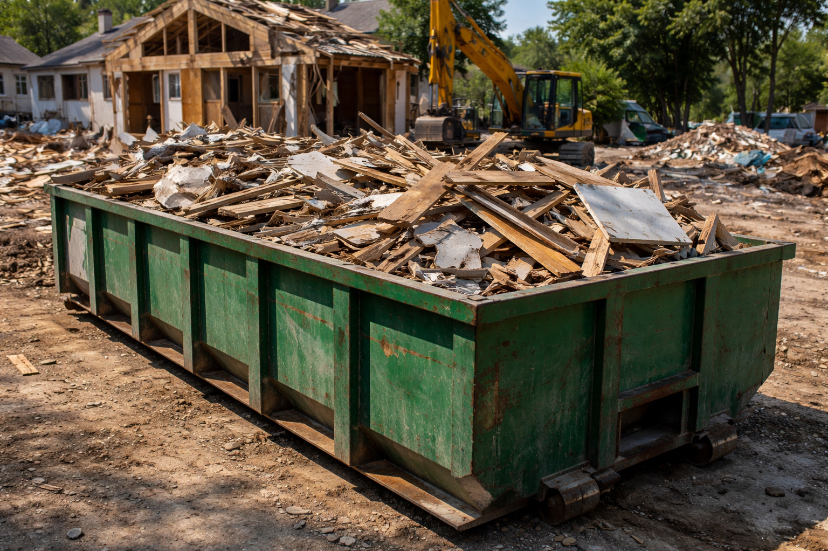
What Size Dumpster Do I Need for a Demolition Project?
Demolition dumpster size depends on structure size, demolition type, and materials:
Calculation method: Measure structure square footage and estimate debris volume using industry factors. Wood-frame structure demolition generates approximately 15-25 cubic yards per 1,000 square feet demolished [SOURCE: Demolition debris volume calculations]. Add 20-30% for multi-story structures or masonry construction.
Size by demolition type:
- 20 yard dumpster: Small structures up to 1,000 square feet including sheds, small garages, and single-room interior demolition; generates 12-18 cubic yards; interior gut-only projects
- 30 yard dumpster: Most residential demolitions 1,000-2,500 square feet including garages, small homes, and substantial interior demolition; generates 20-35 cubic yards; industry standard demolition size
- 40 yard dumpster: Large structures over 2,500 square feet including whole homes and commercial buildings; multi-story demolitions; generates 35-50+ cubic yards
Full versus partial demolition: Full structure demolition removing everything to the foundation generates maximum debris volume using the upper calculation range. Partial demolition of specific sections or walls uses the lower range. Interior gut removing drywall, framing, and fixtures but keeping the structure generates 50-60% of full demolition volume.
Weight considerations: Demolition debris is heavy. A 30 yard dumpster rated for 3-5 tons is adequate for most wood-frame demolition. Concrete, brick, and block demolition may hit weight limits before filling volume since concrete weighs 4,000 pounds per cubic yard. Separate heavy materials into dedicated loads if possible.
Apopka demolition: Most residential demolitions including garages, sheds, and small structures use 30 yard dumpsters. Commercial or whole-home demolition may require 40 yard or multiple 30 yard dumpsters. Contractors standardize on 30 yard for efficiency.
Get demolition dumpster for your project → demolition dumpster rental in Apopka.
How to Estimate Demolition Debris Volume from Structure Size
Learning how to calculate debris volume from structure dimensions provides the estimation framework for your sizing decision.
Basic Demolition Volume Calculation Formula
Wood-frame structure demolition generates approximately 15-25 cubic yards of debris per 1,000 square feet of structure demolished [SOURCE: Demolition debris volume calculations]. The formula: divide structure square footage by 1,000, then multiply by 20 cubic yards average to get estimated debris volume. For example, a 1,500 square foot garage equals 1,500 ÷ 1,000 × 20 = 30 cubic yards requiring a 30 yard dumpster. The range accounts for construction density—older dense framing uses the upper range while modern lighter construction uses the lower range. This formula applies to complete structure demolition removing everything to the foundation or slab.
Single-Story Versus Multi-Story Demolition Factors
Single-story structure demolition uses the standard 15-25 cubic yards per 1,000 square feet calculation. Two-story structure demolition adds 20-30% debris volume due to the additional floor system including joists, subflooring, and flooring, stairway framing and materials, taller wall heights requiring more framing and siding, and more complex roof structure for larger footprint coverage. For example, a 1,200 square foot single-story structure generates 24 cubic yards, while the same footprint as a two-story generates 30-32 cubic yards. Three-story or more: add 15-20% per additional story. Multi-story demolition often requires staging with multiple dumpsters rather than a single oversized dumpster.
Full Demolition Versus Interior Gut Volume Differences
Full structure demolition removing the entire building to the foundation uses the full calculation formula of 15-25 cubic yards per 1,000 square feet, including exterior walls, roof, framing, interior, and foundation removal if applicable. Interior gut demolition removing interior walls, ceilings, and flooring but keeping the exterior shell and roof structure generates approximately 50-60% of full demolition volume—about 8-12 cubic yards per 1,000 square feet of interior space. Partial demolition of specific rooms, sections, or walls requires calculating only the affected square footage using interior gut factors. For example, gutting the interior of a 2,000 square foot home equals 2.0 × 10 cubic yards average = 20 cubic yards, requiring a 20-30 yard dumpster.
Construction Type Affecting Debris Volume
Wood-frame construction representing most residential structures uses the standard 15-25 cubic yards per 1,000 square feet formula. Steel-frame commercial structures generate less volume per square foot at 10-15 cubic yards per 1,000 square feet but involve heavier materials. Concrete block or brick masonry construction produces similar volume to wood-frame but is significantly heavier, requiring weight consideration. Mobile home demolition with lighter construction generates the lower end of the range at 12-18 cubic yards per 1,000 square feet. Pole barn or agricultural structures with minimal debris from open framing and metal roofing generate 8-12 cubic yards per 1,000 square feet.
Roof Structure and Foundation Impact on Volume
Roof demolition adds to total volume. A standard pitched roof adds 15-20% to structure debris including roof shingles, sheathing, and rafters or trusses. A flat or low-slope roof adds 10-15%. A complex roof with multiple dormers, hips, and valleys adds 20-25%. Foundation removal significantly increases volume and weight. Concrete slab foundation adds 30-50% more debris and substantial weight at 4,000 pounds per cubic yard of concrete. Basement foundation demolition can double total project debris. Most demolition projects leave the foundation in place. Removing it requires specialized equipment and dedicated heavy-material disposal.
Demolition Dumpster Size Recommendations by Project Type
Specific size recommendations for common demolition scenarios help you match your demolition to the appropriate dumpster.
Small Structure Demolitions (20 Yard Dumpster)
Sheds under 200 square feet like typical backyard storage sheds measuring 10×12 to 12×16 feet, small detached garages of 400-800 square feet including single-car garages and carports, decks and outdoor structures of 300-600 square feet, single-room interior demolition removing walls, ceiling, and flooring, and small additions or sunrooms under 500 square feet all fit in 20 yard dumpsters [SOURCE: Small structure demolition volumes]. A 20 yard dumpster holds 20 cubic yards, accommodating these smaller demolitions that typically generate 12-18 cubic yards of debris. This size is adequate for projects generating under 20 cubic yards. Note: the 20 yard weight limit of 2-4 tons is sufficient for wood-frame small structures but may constrain capacity if the project includes significant concrete or masonry.
Medium Structure Demolitions (30 Yard Dumpster – Demolition Standard)
Standard detached garages of 800-1,500 square feet including two-car garages and workshop garages, small homes or cottages of 1,000-1,800 square feet like single-story ranches, small bungalows, and lake cottages, substantial interior gut projects of 1,500-2,500 square feet involving whole-home interior demolition while keeping the exterior, large deck or porch demolitions of 600-1,000 square feet, and barn or agricultural structure demolitions of 1,000-2,000 square feet all use 30 yard dumpsters. A 30 yard dumpster holds 30 cubic yards, accommodating 1,000-2,500 square foot demolitions generating 20-35 cubic yards of debris. This is the most common demolition dumpster size [SOURCE: Demolition industry dumpster usage]. It provides adequate capacity without excessive waste. The weight capacity of 3-5 tons handles typical wood-frame demolition. Contractors standardize on 30 yard for demolition efficiency.
Large Structure Demolitions (40 Yard Dumpster)
Whole-home demolitions of 2,000-3,500 square feet representing complete residential structure removal, two-story home demolitions with 1,500-2,500 square foot footprints totaling 3,000-5,000 square feet of total structure, commercial building demolitions including retail, office, and warehouse structures, multi-unit residential demolitions like duplexes and small apartment buildings, and structures with significant masonry content requiring volume for heavy materials all need 40 yard dumpsters. A 40 yard dumpster holds 40 cubic yards, accommodating large demolitions generating 35-50+ cubic yards. This size is necessary when 30 yard capacity proves insufficient. The cost difference from 30 yard typically runs $100-200 in Apopka—a reasonable premium for substantial capacity increase that avoids needing multiple dumpsters.
Very Large or Commercial Demolitions (Multiple Dumpsters or Specialized Approach)
Very large commercial buildings over 5,000 square feet, industrial structures and warehouses, multi-story commercial buildings of 3+ stories, apartment complexes or large-scale multi-family structures, and projects requiring phased demolition over extended timelines typically use multiple approaches. These projects employ multiple sequential 30-40 yard dumpsters with staged delivery as each fills, combinations of different sizes like 40 yard for bulk debris and specialized containers for heavy materials like concrete, or roll-off compactors for maximum efficiency on very large projects. Project management involves coordinating delivery and pickup schedules matching demolition progress.
Interior Gut Versus Selective Demolition Sizing
Complete interior gut of an entire home interior to the studs requires calculating interior square footage × 10 cubic yards per 1,000 square feet. A 2,000 square foot home interior gut equals 20 cubic yards requiring a 20-30 yard dumpster. Kitchen and bathroom demolition only: a kitchen of 200-300 square feet generates 3-5 cubic yards, a bathroom of 50-100 square feet generates 2-3 cubic yards, and both together generate 5-8 cubic yards requiring a 15 yard dumpster. Single room demolition: a bedroom or living room of 150-250 square feet generates 2-4 cubic yards requiring a 10-15 yard dumpster. Wall removal only without ceiling or floor work: 100 linear feet of interior wall generates 3-4 cubic yards. Selective demolition requires precise measurement of only the affected areas.
Rent demolition dumpster for your structure size.
Demolition Debris Weight and Material Considerations
Unique characteristics of demolition debris affect capacity and weight limits, requiring attention to prevent weight violations with heavy materials.
Wood-Frame Demolition Weight Characteristics
Typical wood-frame structure demolition including framing lumber, sheathing, siding, roofing, drywall, and flooring generates moderate-weight debris. Wood framing lumber weighs approximately 25-30 pounds per cubic foot. Drywall adds weight at 50-60 pounds per 4×8 sheet. Roofing shingles are heavy at 2-4 pounds per square foot. Combined wood-frame demolition debris averages approximately 300-500 pounds per cubic yard of mixed materials. A 30 yard dumpster holding 25 cubic yards of wood-frame debris weighs 3.5-6 tons, which is within or approaching the typical 30 yard weight limit of 3-5 tons. Most wood-frame demolitions fit the weight capacity if properly sized for volume.
Concrete, Brick, and Masonry Demolition Weight
Concrete weighs approximately 4,000 pounds per cubic yard [SOURCE: Concrete weight specifications]—extremely heavy compared to wood debris. Brick weighs 3,500-4,000 pounds per cubic yard. Concrete block or CMU weighs 3,000-3,500 pounds per cubic yard. The implication: a 30 yard dumpster filled with concrete weighs 60 tons, far exceeding weight capacity. Concrete and masonry demolition requires sizing by weight not volume, meaning a 30 yard dumpster may hold only 3-4 cubic yards of concrete to stay within the weight limit. It also requires separating concrete and brick into dedicated heavy-material loads and using specialized concrete dumpsters with lower cubic yard capacity but higher weight limits. Mixed demolition that separates concrete foundation from wood structure optimizes capacity.
Dumpster Weight Limits by Size
A 20 yard dumpster typically has a 2-4 ton weight limit (4,000-8,000 pounds) adequate for small wood-frame demolitions or very limited concrete. A 30 yard dumpster typically has a 3-5 ton weight limit (6,000-10,000 pounds) handling most residential wood-frame demolition [SOURCE: Demolition dumpster weight specifications]. A 40 yard dumpster typically has a 5-8 ton weight limit (10,000-16,000 pounds) for large demolitions. Exceeding the weight limit results in overage charges of $50-100 per ton over the limit [SOURCE: Demolition dumpster overage fees]. Severe overage may result in the dumpster being too heavy to safely pick up, requiring partial unloading. Inform your provider if the demolition includes significant concrete or masonry so appropriate weight allowance can be provided.
Mixed Material Demolition Strategy
Demolitions generate a mix of materials with varying densities: light materials including insulation, drywall, and wood studs; medium-weight materials including dimensional lumber, roofing, and siding; and heavy materials including concrete, brick, tile, and appliances or fixtures. Loading strategy should place heavy materials on the bottom such as concrete chunks, masonry, and heavy framing, medium-weight materials in the middle layer like lumber and roofing debris, and light materials on top filling voids like drywall and insulation. This distribution maximizes capacity utilization, keeps the center of gravity low for safe transport, and prevents crushing light materials under heavy ones. Avoid loading all heavy materials in one end, creating an unbalanced load.
Materials Prohibited in Demolition Dumpsters
Standard demolition dumpsters accept construction debris including wood, drywall, roofing, siding, windows, doors, flooring, and framing materials. They cannot dispose of hazardous materials. Asbestos-containing materials require certified abatement and specialized disposal. Lead paint debris in quantity may require testing. CCA-treated lumber is restricted in some jurisdictions. Liquids including paint, solvents, and fuels are prohibited. Chemicals and pesticides, appliances with refrigerants unless properly recovered, tires, batteries, and electronics cannot be included. Older structures built pre-1980s have a higher likelihood of asbestos in insulation, siding, and flooring, requiring testing before demolition. If asbestos is present, certified abatement is required before general demolition can proceed.
[CRM Roll Off regularly works with Apopka demolition contractors and property owners on capacity planning. We’ve observed that most wood-frame garage demolitions (two-car garages around 800-1,200 square feet) fill a 30 yard dumpster to approximately 70-85% capacity, confirming the 15-25 cubic yards per 1,000 square feet calculation. However, we’ve also seen projects hit weight limits unexpectedly. One recent demolition of a 1,000 square foot concrete block structure filled a 30 yard dumpster to only 40% volume capacity but exceeded the 5-ton weight limit by 1.5 tons, resulting in $120 in overage charges. We now recommend separating concrete block or brick demolition into dedicated heavy-material loads or using multiple smaller dumpsters sized by weight rather than volume. For mixed demolitions removing both wood-frame structure and concrete foundation, we guide customers to demo and load the wood framing first in a 30 yard, then use a separate 20 yard rated for heavy materials specifically for the concrete foundation work.]
Order demolition dumpster in Apopka.
Common Demolition Dumpster Sizing Mistakes to Avoid
Identifying frequent errors in demolition dumpster sizing prevents costly mistakes through specific warnings and guidance.
Underestimating Debris Volume from Complete Demolition
The most common mistake involves calculating only the visible structure without accounting for hidden components. Demolition debris includes exterior walls with siding, sheathing, framing, and insulation; interior walls with drywall on both sides, studs, and insulation; floor systems with flooring, underlayment, subfloor, and joists; ceiling and roof with ceiling finish, insulation, roof deck, shingles, and rafters or trusses; and fixtures and built-ins including cabinets, counters, trim, doors, and windows. First-time demolition planning underestimates by 30-40%, missing hidden framing and substrates. For example, a 1,000 square foot structure calculated as needing 15 cubic yards actually generates 22-25 cubic yards. Solution: use industry factors of 15-25 cubic yards per 1,000 square feet proven through contractor experience rather than guessing from visual assessment.
Not Accounting for Two-Story or Basement Structures
Applying single-story calculation to a two-story structure severely underestimates volume. A two-story structure isn’t simply 2× the debris—it’s 2.2-2.4× due to the additional floor system between stories, stairway structure and materials, taller wall heights, and larger roof structure. Basement structures add substantial volume if basement walls are being demolished, including foundation walls, floor slab if removed, and mechanical systems concentrated in the basement. For example, a 1,200 square foot footprint two-story home with basement calculated as single-story at 24 cubic yards actually generates 55-65 cubic yards, requiring two 30 yard dumpsters or one 40 yard. Solution: accurately count all stories and account for the basement if applicable.
Choosing Size Based on Building Footprint Alone
Building footprint representing ground floor square footage doesn’t equal total structure square footage for multi-story buildings. Footprint is useful for single-story structures only. A two-story building with 1,000 square foot footprint equals 2,000 square feet total structure. A three-story building with 800 square foot footprint equals 2,400 square feet total structure. Demolition debris must be calculated from total structure square footage, not footprint. For example, a contractor seeing a 1,500 square foot footprint two-story home orders a 30 yard thinking it’s a 1,500 square foot demolition, but it’s actually a 3,000 square foot structure needing 40-50 cubic yards and requiring a second dumpster. Solution: calculate total structure square footage by multiplying footprint × number of stories, then apply debris factors.
Mixing Concrete Demolition with General Demo in Single Dumpster
Concrete foundation or slab removal mixed with wood-frame demolition hits weight limits quickly. For example, a 1,200 square foot garage demolition including a 4-inch concrete floor slab generates 24 cubic yards of wood-frame debris plus 4 cubic yards of concrete slab that weighs 8 tons. Combined in a 30 yard dumpster with a 5 ton limit creates 3 ton overage at $75 per ton equaling $225 extra plus potential pickup issues. Better approach: use a 30 yard for wood-frame demolition and a separate 20 yard for concrete-only rated for heavy materials. Total cost is similar but avoids overage and operational issues. Solution: separate concrete and masonry into dedicated heavy-material loads.
Forgetting Demolition Happens Quickly Creating Immediate Capacity Need
Demolition progresses much faster than construction. Mechanical equipment like excavators and bobcats demolishes structures in hours to 2-3 days versus the months required to build. The dumpster fills rapidly, requiring adequate capacity immediately. There’s no opportunity to “see how much debris” accumulates and order a second dumpster mid-demolition because the demo crew and equipment are waiting, the project timeline is compressed, and efficiency is lost. For example, an excavator demolishing a 1,500 square foot structure in 8-12 hours fills the dumpster the same day. An undersized 20 yard that’s full by noon requires emergency second delivery, delaying the project. Solution: size correctly from the start accounting for rapid debris generation. It’s better to have slight excess capacity than halt demolition waiting for a second dumpster.
[CRM Roll Off has responded to numerous emergency calls from Apopka demolition projects that underestimated debris volume. One contractor demolishing what appeared to be a simple single-story 1,400 square foot ranch home ordered a 30 yard dumpster expecting approximately 28 cubic yards of debris. Once demolition began, they discovered the home had a partial basement under half the structure that wasn’t visible from the exterior. The basement foundation walls and additional framing pushed total debris to 42 cubic yards. The 30 yard filled completely with the dumpster only 75% through the demolition. We delivered an emergency second 20 yard the same day to avoid halting the project, but the total cost of two dumpsters ($450 + $375 = $825) exceeded what a single 40 yard would have cost ($650). In another case, a property owner separated concrete foundation from wood-frame debris following our recommendation. The wood-frame demolition of an 800 square foot garage filled a 20 yard as expected. The 3-inch concrete slab went into a separate 10 yard rated for heavy materials. This approach avoided the $150-200 in overage charges they would have incurred mixing the materials in a single dumpster.]
Avoid sizing mistakes—get free consultation.
Choosing the Right Demolition Dumpster Size for Your Apopka Project
An actionable decision framework specific to Apopka transitions to service engagement with clear next steps.
Step-by-Step Demolition Sizing Decision Framework
(1) Measure structure dimensions by multiplying length × width to get footprint square footage, count the number of stories, and measure or estimate total structure square footage. (2) Determine demolition type: full structure removal, interior gut only, or partial demolition of specific sections. (3) Calculate debris volume: full demolition equals structure square footage ÷ 1,000 × 20 cubic yards, interior gut equals interior square footage ÷ 1,000 × 10 cubic yards, add 20-30% for two-story structures. (4) Assess materials—wood-frame is standard, concrete or masonry requires weight consideration. (5) Select size: under 20 cubic yards equals 20 yard dumpster, 20-35 cubic yards equals 30 yard dumpster, over 35 cubic yards equals 40 yard or multiple dumpsters. (6) Add buffer for uncertainty or complex structures—10-15% extra capacity is safer than underestimating.
Apopka Demolition Project Characteristics
Older structures in Apopka from 1960s-1980s construction often have denser framing and materials than modern lightweight construction, requiring the upper end of volume estimates. Florida climate considerations include termite damage or rot that may increase debris volume from deteriorated materials, and hurricane damage creating irregular debris from structural failures. Common Apopka demolitions include detached garages and sheds using 30 yard as standard, older mobile home or manufactured home removal requiring 20-30 yard depending on size, interior gut renovations of whole homes needing 20-30 yard, and pool deck or screen enclosure demolition requiring 15-20 yard for concrete and framing.
Contractor Coordination and Professional Estimation
If hiring a demolition contractor, they provide debris volume estimates based on structure assessment and experience. Experienced demolition contractors know typical debris volumes for different structure types. The contractor may include dumpster rental in their bid where they order and coordinate, or specify the required size if you’re ordering separately. Provide the contractor’s assessment to the dumpster company for sizing verification. Demolition contractors understand safe loading procedures including distributing weight properly and not exceeding the fill line, material separation if needed such as separating concrete from wood framing, and timing coordination by coordinating dumpster delivery with the demolition schedule and pickup when full or project complete.
Phased Demolition and Multiple Dumpster Strategy
Very large demolitions may use a phased approach with sequential dumpsters. Phase 1 involves roof and upper story removal using a 30 yard for roofing and upper framing. Phase 2 covers main structure demolition using a 30-40 yard for walls and floor systems. Phase 3 handles foundation removal if applicable using a 20-30 yard specialized for concrete. Advantages include spreading cost over the project timeline, avoiding a massive single dumpster, allowing material separation, and providing flexibility if project scope changes. Disadvantages include requiring coordination of multiple deliveries and pickups and a slight cost premium versus a single larger dumpster. Decision point: structures over 3,000 square feet or projects with extended timelines often benefit from the phased approach.
Cost Optimization and Sizing Strategy for Apopka Demolitions
Twenty yard dumpsters cost $350-450 in Apopka, 30 yard cost $450-550, and 40 yard cost $600-750 [SOURCE: Apopka demolition dumpster pricing]. Cost per cubic yard: 20 yard equals $20-22 per yard, 30 yard equals $15-18 per yard representing the best value, and 40 yard equals $15-19 per yard. The 30 yard provides the best cost efficiency for demolition—it’s adequate for most residential projects, cost-effective per yard, and has weight capacity sufficient for wood-frame demolition. Upgrading from 30 to 40 yard costs $150-200 but provides 33% more capacity, making it worth the premium for large structures or uncertainty. Undersizing represents false economy: a second 20 yard at $350-450 costs more than the initial 30 yard upgrade at $100 premium. CRM Roll Off provides free demolition sizing consultations. Describe your structure type, dimensions, and demolition scope, and we’ll calculate the appropriate size, preventing costly errors.
Ready to order? Rent demolition dumpster or call for sizing help.
Sizing Your Demolition Dumpster Correctly
Demolition dumpster size depends on structure size, demolition type, and materials. The calculation method involves measuring structure square footage with wood-frame structures generating 15-25 cubic yards per 1,000 square feet demolished, adding 20-30% for multi-story structures. A 20 yard dumpster handles demolitions up to 1,000 square feet. A 30 yard accommodates 1,000-2,500 square feet as the demolition standard. A 40 yard serves structures over 2,500 square feet.
Full structure demolition removing everything to the foundation uses the maximum debris volume calculation. Interior gut removing drywall, framing, and fixtures while keeping the structure generates 50-60% of full demolition volume. Weight considerations are critical—demolition debris is heavy with concrete weighing 4,000 pounds per cubic yard. A 30 yard dumpster rated for 3-5 tons handles most wood-frame demolition but concrete and masonry may hit weight limits before filling volume.
Common mistakes include underestimating debris volume from complete demolition by 30-40%, not accounting for two-story or basement structures that generate 2.2-2.4× the debris of single-story, choosing size based on building footprint alone while ignoring total structure square footage, mixing concrete with general demolition and hitting weight limits, and forgetting that rapid demolition requires adequate capacity immediately.
Most Apopka residential demolitions including garages, sheds, and small structures use 30 yard dumpsters. The 30 yard provides the best cost efficiency at $15-18 per cubic yard with adequate capacity and weight limits for typical wood-frame projects. Separating concrete and masonry into dedicated heavy-material loads optimizes capacity and avoids overage charges.
CRM Roll Off provides free demolition sizing consultations for Apopka projects. We understand Florida demolition characteristics including older dense-framed structures, termite or hurricane damage affecting volume, and proper material separation strategies.
Planning a demolition project in Apopka? CRM Roll Off provides demolition dumpsters sized specifically for your structure. Tell us your building dimensions, number of stories, and demolition type (full demo or interior gut), and we’ll recommend the perfect size—30 yard for most residential demolitions, 20 yard for small structures, 40 yard for large buildings. Our demolition dumpsters accommodate wood-frame, masonry, and mixed materials with appropriate weight capacity. We understand Florida demolition characteristics and provide guidance on material separation and proper loading. Call (321) 228-0245 for demolition dumpster sizing help or rent your demolition dumpster online.