
What size dumpster do I need for a renovation
You’re planning a home renovation and researching dumpster rental. But what size renovation dumpster rental do I need? The answer depends entirely on renovation scope. A cosmetic kitchen update replacing just cabinets and countertops generates 4-6 cubic yards requiring a 15 yard dumpster, while a full kitchen gut removing cabinets, countertops, appliances, flooring, and drywall generates 10-14 cubic yards requiring a 20 yard dumpster [SOURCE: Renovation debris volume estimates]. Renovation type determines capacity: bathroom remodels generate 4-6 cubic yards (15 yard), kitchen remodels generate 8-12 cubic yards (20 yard), and whole-home renovations generate 25-35 cubic yards (30 yard). For Apopka renovation projects, proper sizing matters because renovation debris expands significantly—installed drywall has a 1:3 expansion ratio when demolished, meaning 100 square feet of wall becomes 3-4 cubic yards of debris. Understanding the relationship between renovation scope and dumpster capacity prevents costly mistakes like ordering too small and requiring expensive second rental mid-project, or ordering too large and wasting money on unused capacity.
This guide answers what size dumpster do I need for a renovation and explains how to size based on renovation scope, typical debris volumes by project type, and renovation-specific factors for Apopka projects.
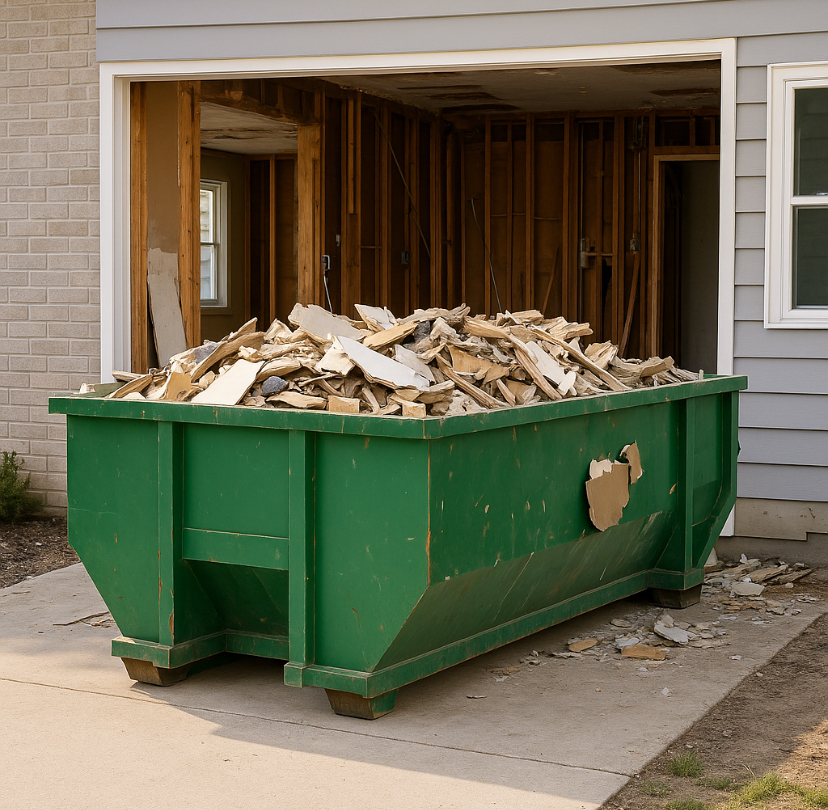
What Size Dumpster Do I Need for a Renovation?
Renovation dumpster size depends on project scope (cosmetic versus gut) and rooms affected:
By renovation type:
- Bathroom remodel: 4-6 cubic yards; 15 yard dumpster (vanity, toilet, tub or shower, tile, minimal drywall)
- Kitchen remodel: 8-12 cubic yards; 20 yard dumpster (cabinets, countertops, appliances, flooring, backsplash, some drywall)
- Multi-room renovation: 15-20 cubic yards; 20-30 yard dumpster (2-3 rooms with demo work)
- Whole-home renovation: 25-35 cubic yards; 30 yard dumpster (gutting 3+ rooms or entire interior)
Cosmetic versus gut renovation:
- Cosmetic updates (replacing fixtures and surfaces only): Use lower end of range; kitchen cosmetic equals 15 yard
- Full gut (removing drywall, flooring, structural work): Use upper end or size up; kitchen gut equals 20 yard
Debris expansion factor: Installed materials expand when demolished. Drywall has a 1:3 ratio—100 square feet of wall equals 3-4 cubic yards of debris. Account for expansion in calculations [SOURCE: Drywall debris expansion].
Apopka renovations: Most single-room remodels (kitchen or bathroom) equal 20 yard standard. Whole-home equals 30 yard. Contractors prefer sizing up slightly for buffer.
Timeline consideration: Standard rental 7-14 days. Bathroom remodels take 7-10 days, kitchen remodels take 7-10 days, whole-home takes 2+ weeks.
Get renovation dumpster for your project → renovation dumpster rental in Apopka.
How Renovation Scope Determines Dumpster Size
Teaching you how to assess renovation scope and convert to dumpster size provides the framework for your sizing decision.
Cosmetic Updates Versus Full Gut Renovations
Cosmetic renovations replace surfaces and fixtures without removing drywall or structural elements. This includes replacing cabinets, countertops, flooring, fixtures, and painting. They generate 30-50% less debris than gut renovations. Full gut renovations remove everything to studs—stripping drywall, removing all flooring, gutting to structural framing, and replacing systems. They generate 2-3 times the debris volume of cosmetic updates. For example, a cosmetic kitchen update with just cabinets and counters equals 4-6 cubic yards, while a full kitchen gut including cabinets, counters, appliances, flooring, and drywall equals 10-14 cubic yards. Understanding which category your renovation falls into is the first sizing step.
Room Count and Square Footage Affected
A single room renovation (one bathroom or one kitchen) generates 4-14 cubic yards depending on room size and scope. A two-room renovation (kitchen plus bathroom) generates 12-20 cubic yards combined. A multi-room renovation (3+ rooms or whole floor) generates 20-30+ cubic yards. A whole-home renovation gutting the entire interior generates 30-50+ cubic yards. Square footage matters—a small bathroom at 50 square feet generates less debris than a master bathroom at 150 square feet. A large kitchen over 300 square feet generates more than a galley kitchen at 100 square feet. Calculate your affected square footage and account for scope.
Structural Work and Load-Bearing Changes
Renovations involving structural changes like removing walls, adding openings, or structural repairs generate additional debris. Load-bearing wall removal requires engineer involvement and creates substantial debris including studs, headers, and drywall from both sides, plus structural materials. Non-load-bearing wall removal still generates significant volume. Moving plumbing or electrical creates access holes requiring drywall removal and repair. Structural renovations typically need the next size up from cosmetic estimates. For example, a kitchen renovation removing a wall between kitchen and dining room adds 3-5 cubic yards to standard kitchen gut volume.
Flooring Removal Debris Volume
Flooring type and layers affect debris volume significantly. Ceramic or porcelain tile removal generates heavy, bulky debris—1,000 square feet of tile equals 3-5 cubic yards. Hardwood flooring removal equals 2-3 cubic yards per 1,000 square feet and is relatively compact. Vinyl or linoleum has minimal volume. Carpet and padding equal 1-2 cubic yards per 1,000 square feet and compress well. Laminate flooring is similar to hardwood. Removing multiple layers like tile over hardwood over subfloor multiplies volume. Subfloor replacement with plywood or OSB adds 50-75% to your flooring debris calculation.
Quick Renovation Scope to Size Reference
Cosmetic single room (bathroom or small kitchen) equals 15 yard dumpster. Full gut single room (bathroom or kitchen) equals 20 yard dumpster. Cosmetic two-room (kitchen plus bathroom) equals 20 yard dumpster. Full gut two-room or cosmetic whole floor equals 20-30 yard dumpster. Whole-home gut renovation equals 30 yard dumpster. Adding structural work, extensive flooring, or ceiling work means sizing up one level. When uncertain about scope or debris volume, choosing the larger size provides buffer preventing mid-project capacity crisis.
Renovation Dumpster Size Recommendations by Project Type
Specific size recommendations for common residential renovation scenarios help you match your renovation to the appropriate dumpster.
Bathroom Remodels (15-20 Yard)
A small bathroom remodel under 75 square feet (hall bath, powder room) with cosmetic updates including vanity, toilet, and tub or shower surround equals 15 yard dumpster holding 4-5 cubic yards of debris comfortably. A full small bathroom gut removing all fixtures, tile, and drywall equals 15 yard dumpster at 6-8 cubic yards. A large bathroom remodel like a master bath at 100-150 square feet with full gut including separate tub, shower, double vanity, and extensive tile equals 20 yard dumpster handling 8-10 cubic yards. Tile debris is particularly voluminous and heavy, including floor tile, shower tile, and tub surround tile. Most bathroom renovations fit in 15 yard unless it’s a master bath with extensive scope.
Kitchen Remodels (20 Yard – Standard)
A cosmetic kitchen update replacing cabinets and countertops only while keeping appliances with no flooring or drywall work equals 15 yard dumpster for 6-8 cubic yards. A standard kitchen remodel including cabinets, countertops, appliances, flooring, backsplash, and some drywall repair equals 20 yard dumpster for 10-12 cubic yards. A large kitchen gut removing everything including island, pantry cabinets, flooring, drywall, and ceiling equals 20 yard at capacity or 30 yard with buffer for 14-18 cubic yards. Kitchen renovations are the most common residential renovation type, making 20 yard the industry standard providing adequate capacity without excessive waste.
Combined Kitchen and Bathroom Renovations (20-30 Yard)
Renovating kitchen plus one bathroom simultaneously generates combined debris volume. Cosmetic updates in both spaces including cabinets, fixtures, and minimal demo equals 20 yard dumpster for 12-16 cubic yards. Full gut kitchen plus full gut bathroom equals 30 yard dumpster for 18-24 cubic yards. This is a popular renovation combination for updating main living spaces together. Timeline efficiency allows one dumpster rental for both projects versus sequential rentals. Cost optimization shows 30 yard at $400-500 in Apopka handles both projects versus two 20 yard rentals totaling $700-900.
Whole-Home and Multi-Room Renovations (30 Yard)
Renovating 3+ rooms or an entire floor requires substantial capacity. A whole-home gut renovation removing drywall, flooring, and fixtures throughout equals 30 yard dumpster for 25-35 cubic yards. Open-concept renovations removing multiple walls equal 30 yard. Whole-floor renovation of entire second floor or entire main level equals 30 yard. Addition integration renovations connecting new addition to existing home and remodeling surrounding areas equal 30 yard. Major renovation projects benefit from 30 yard capacity, avoiding mid-project rentals. Some very large whole-home guts may require 30 yard plus additional 20 yard or upgrading to 40 yard.
Specialty Renovation Considerations
Basement finishing including framing, drywall, and flooring in unfinished basements generates less demolition debris than remodeling. Framing scraps, drywall offcuts, and packaging equal 10-15 cubic yards in 20 yard dumpster. Attic conversions are similar to basement finishing. Porch or sunroom additions generate construction debris not renovation debris with different volume characteristics. Fire or water damage renovations generate unpredictable debris volume including damaged materials, contaminated items, and structural repairs—consult with provider for specialized sizing. Historic home renovations often generate more debris due to plaster walls which are heavier than drywall, lathe, and outdated materials.
Rent renovation dumpster for your project type.
Cosmetic Updates vs. Full Gut Renovations: Sizing Differences
Clarifying the critical distinction between cosmetic and gut renovations affects sizing accuracy and prevents underestimating gut renovation debris volume.
What Qualifies as Cosmetic Renovation
Cosmetic renovations replace visible surfaces and fixtures without removing structural elements. In kitchens, this means replacing cabinets, countertops, backsplash, and appliances with no drywall removal while flooring stays or gets replaced without subfloor work. In bathrooms, it means replacing vanity, toilet, tub or shower surround, and fixtures with tile work limited to backsplash or small areas. This includes painting, trim replacement, and fixture updates. Cosmetic renovations keep existing footprint and layout—no walls moved and no structural changes. They generate 40-60% less debris than gut renovations in the same space. Timeline is quicker at 3-7 days for bathrooms and 7-10 days for kitchens.
What Constitutes Full Gut Renovation
Gut renovations remove everything to studs and subfloor. This means stripping all drywall down to framing, removing all flooring down to subfloor or joists, and removing ceiling drywall if needed. It includes complete fixture and cabinet removal. Extensive structural exposure happens for systems replacement including plumbing, electrical, and HVAC. Gut renovations often include layout changes like moving walls, creating openings, and reconfiguring spaces. They generate 2-3 times the debris volume of cosmetic updates due to drywall, flooring underlayment, and structural materials. Timeline is longer at 1-2 weeks for bathrooms, 2-3 weeks for kitchens, and 3-6 weeks for whole-home. Gut renovations are necessary for major layout changes, addressing hidden damage like water, mold, or structural issues, and upgrading old homes to modern standards.
Debris Volume Comparison Examples
A small bathroom at 75 square feet with cosmetic update including vanity, toilet, and shower surround equals 4-5 cubic yards, filling a 15 yard dumpster to 30%. The same bathroom with full gut including all fixtures, all tile, all drywall, and flooring equals 7-9 cubic yards, filling a 15 yard dumpster to 60% or a 20 yard to 40%. A standard kitchen at 200 square feet with cosmetic work including cabinets, counters, and backsplash equals 6-8 cubic yards, filling a 15 yard to 50%. The same kitchen with full gut including everything plus drywall, flooring, and ceiling equals 12-16 cubic yards, filling a 20 yard to 60-80% or a 30 yard to 50%. The difference shows gut renovations generate 60-100% more debris than cosmetic.
Gray Area: Partial Gut Renovations
Many renovations fall between pure cosmetic and full gut. These involve replacing some but not all drywall, removing flooring but keeping some walls intact, or updating layout partially. These “partial gut” renovations complicate sizing. Examples include a kitchen with new cabinets and flooring plus removing one wall, or a bathroom with new tile, fixtures, and some drywall repair but not full gut. Sizing approach: start with cosmetic estimate, then add 30-50% for each gut element like drywall removal, extensive flooring work, or structural changes. When in doubt with partial gut, size up to the next dumpster size for buffer.
Why People Underestimate Gut Renovation Debris
The most common sizing mistake—homeowners planning gut renovation estimate based on cosmetic renovation volumes. They see “kitchen remodel” and think 8-10 cubic yards when full gut actually requires 14-18 cubic yards. They don’t account for drywall expansion where installed drywall is compact but demolished drywall is bulky with a 1:3 expansion ratio. They don’t consider underlayment, subfloor, and framing debris if removing. The contractor says “full renovation” but the homeowner pictures “cosmetic update.” Solution: clarify renovation scope explicitly. Are we removing drywall? Stripping to studs? Removing flooring to subfloor? Size accordingly. It’s better to have 20% unused capacity than run out at 60% project completion requiring a second rental.
[CRM Roll Off regularly works with Apopka homeowners on renovation sizing. We had a customer planning what they called a “kitchen remodel” who initially estimated needing a 15 yard dumpster. After clarifying scope, we learned they were gutting the kitchen to studs, removing a wall to the dining room, replacing all flooring including subfloor, and removing ceiling drywall to relocate recessed lighting. This wasn’t a cosmetic update—it was a full gut plus structural work. We recommended a 30 yard dumpster. The project generated approximately 22 cubic yards of debris, filling the 30 yard to about 75% capacity. A 15 yard would have overflowed before they finished demo on day one, and even a 20 yard would have required a second rental. Clarifying “cosmetic” versus “gut” prevented a very costly mistake and project delay.]
Order renovation dumpster in Apopka.
Renovation Debris Characteristics Affecting Dumpster Sizing
Unique characteristics of renovation debris affect capacity and sizing decisions, particularly regarding expansion, density, and material types.
Drywall Debris Expansion Factor
Installed drywall is compact and space-efficient. A 4×8 foot sheet covering 32 square feet occupies minimal space when mounted on a wall. Demolished drywall breaks into irregular pieces creating substantial volume. The same 32 square foot sheet becomes 1-1.5 cubic yards of debris, representing a 3:1 expansion ratio [SOURCE: Drywall debris expansion calculations]. Removing 100 square feet of wall drywall from both sides totaling 200 square feet generates 6-9 cubic yards of debris. This explains why gut renovations removing drywall generate much more volume than expected. Drywall doesn’t compress well in dumpsters due to rigid gypsum core and paper facing creating air gaps. Proper loading by breaking into smaller pieces improves compaction slightly, but the expansion factor remains significant.
Cabinet and Fixture Debris Characteristics
Kitchen cabinets are bulky and awkward. A full kitchen cabinet set at 15-20 linear feet of upper and lower cabinets occupies 4-6 cubic yards in a dumpster despite relatively light weight. Cabinets don’t stack efficiently due to doors, shelves, and odd shapes creating voids. Bathroom vanities show similar bulkiness at 2-3 cubic yards for a typical 60-inch double vanity. Countertops vary—laminate counters have minimal volume and weight, while granite or quartz counters are heavy at 3 pounds per square foot [SOURCE: Countertop material weights] but relatively compact. Bathtubs differ dramatically—cast iron tubs are extremely heavy at 300-500 pounds [SOURCE: Fixture weight specifications] but occupy small volume at 1-2 cubic yards, while acrylic or fiberglass tubs are light but bulky at 2-3 cubic yards. Old appliances including refrigerators, dishwashers, and ranges contribute 2-4 cubic yards combined.
Flooring Debris Volume and Density
Ceramic or porcelain tile is the heaviest and bulkiest flooring debris. Broken tile pieces don’t stack well. One hundred square feet of tile floor equals 1.5-2 cubic yards of debris. Hardwood flooring is relatively compact since strips stack reasonably well. One hundred square feet equals 0.75-1 cubic yard. Vinyl or linoleum has minimal volume since sheets roll and compress. Carpet with padding equals 1-1.5 cubic yards per 100 square feet, with padding occupying more volume than carpet itself. Laminate flooring is similar to hardwood. Underlayment adds volume through foam, felt, or membrane layers. Subflooring if removed with plywood or OSB significantly increases volume—100 square feet of subfloor replacement adds 1-1.5 cubic yards.
Mixed Renovation Debris Compaction
Renovation debris contains a mix of materials with different densities and compaction characteristics. Heavy materials like tile, countertops, and fixtures settle to the bottom. Light materials like drywall, insulation, and packaging fill the upper portion and gaps. Mixed debris achieves 60-75% compaction efficiency versus 80-90% for uniform materials like roofing shingles. Irregular shapes including cabinets, fixtures, and broken tile create voids reducing effective capacity. Realistic expectation: a 20 yard dumpster holds 14-16 cubic yards of renovation debris effectively, not the theoretical 20 yards. This accounts for mixed materials, bulky items, and inefficient packing.
Prohibited Materials and Disposal Restrictions
Standard renovation dumpsters accept construction debris including drywall, wood, metal, cabinets, fixtures, flooring, tile, countertops, and appliances without refrigerants. You cannot dispose of hazardous materials like paint, solvents, or adhesives in bulk, asbestos which requires certified abatement, lead paint chips in quantity since homes built pre-1978 may require testing, or appliances with refrigerants unless properly recovered. Liquids, chemicals, and batteries are also prohibited. Most renovation debris is acceptable in construction dumpsters. Apopka accepts typical renovation materials. Large quantities of specific materials like pure concrete from foundation work or clean fill dirt may require specialized disposal or separate loads for cost efficiency.
[CRM Roll Off has observed that actual capacity utilization varies significantly by renovation type. Cosmetic kitchen updates with mostly cabinet and countertop debris typically fill a 20 yard dumpster to 60-70% capacity for 12-14 cubic yards of calculated debris due to efficient stacking. Full gut kitchen renovations with substantial drywall debris fill the same 20 yard to 90-95% capacity for the same calculated volume due to drywall expansion and irregular shapes. We’ve found that the drywall expansion factor is real and significant—one recent whole-home gut renovation in Apopka removed approximately 2,000 square feet of drywall surface area (both sides of walls throughout the home). This generated roughly 60 cubic yards of drywall debris alone, requiring two 30 yard dumpsters just for the drywall portion of the renovation before accounting for flooring, cabinets, and fixtures.]
Schedule renovation dumpster delivery.
Choosing the Right Renovation Dumpster Size for Your Apopka Project
An actionable decision framework specific to Apopka transitions to service engagement with clear next steps.
Decision Framework for Renovation Sizing
(1) Define renovation scope clearly—cosmetic or gut? Which rooms? What square footage is affected? (2) Estimate debris volume by room: bathroom cosmetic 4-6 yards or gut 6-10 yards, kitchen cosmetic 6-8 yards or gut 10-14 yards, with additional rooms adding proportionally. (3) Account for special factors: structural work adds 20-30%, extensive flooring adds 15-25%, drywall removal adds 30-40%. (4) Calculate total cubic yards from all sources. (5) Select dumpster: under 12 yards equals 15 yard, 12-18 yards equals 20 yard, 18-28 yards equals 30 yard. (6) When uncertain or on the cusp between sizes, choose larger for buffer.
Apopka Home Renovation Patterns
Most Apopka homes were built in the 1980s through 2000s and are undergoing their first major renovation as they age. Typical renovations include kitchen and bathroom updates as the most common, whole-home renovations preparing homes for sale, and open-concept conversions removing walls between kitchen, dining, and living areas. Apopka renovation timeline patterns show kitchen remodels taking 2-3 weeks, bathroom remodels taking 1-2 weeks, and whole-home projects taking 1-3 months. Climate considerations matter—Florida humidity means water damage renovations are common, with bathroom mold remediation and kitchen water damage repair generating additional demo debris beyond cosmetic plans.
Timeline and Rental Period Coordination
Standard dumpster rental of 7-14 days aligns with most single-room renovation timelines. Bathroom remodel timeline includes demo at 1-2 days, rough-in and framing at 2-3 days, drywall and tile at 3-4 days, and finish work at 2-3 days for a total of 8-12 days, making 14 day rental coverage complete. Kitchen remodel timeline includes demo at 2-3 days, rough-in at 2-3 days, cabinets and counters at 2-3 days, and finish at 3-4 days for a total of 10-14 days. Whole-home renovations lasting 2-4+ weeks may need extended rental or a second dumpster. Coordinate delivery so the dumpster arrives the day before or morning of demo. Schedule pickup after demo is complete and debris is loaded, typically with 60-80% of debris generated in the first 3-5 days.
Contractor Coordination and Sizing Verification
Professional renovation contractors provide debris volume estimates based on scope of work. Experienced contractors know typical debris volumes for different renovation types. Verify the contractor’s dumpster size recommendation against the scope—if the contractor says 20 yard for a whole-home gut, question whether that’s adequate. Some contractors include dumpster rental in their quote where they order and coordinate everything. If you’re ordering separately, provide the contractor’s detailed scope of work to the dumpster company for accurate sizing. Discuss debris loading responsibility since homeowner loading versus contractor loading affects placement and access. Contractors often prefer 20 yard as standard since it fits most driveways, is adequate for most renovations, and provides familiar capacity.
Cost Optimization for Apopka Renovations
Fifteen yard costs $300-350, 20 yard costs $350-450, and 30 yard costs $400-500 in Apopka. Cost differences are modest: 15 to 20 yard equals $50-100 for 50% capacity increase, and 20 to 30 yard equals $50-100 for another 50% capacity increase. Value analysis shows $50-100 premium for the next size up provides substantial buffer, avoiding $300-450 second rental if you undersize. The most cost-effective strategy involves sizing up when uncertain. Spending $75 more for 30 yard versus 20 yard is dramatically better than needing a second 20 yard at $350-450. Renovation project budgets typically run $10,000-50,000 or more, making the $50-100 dumpster sizing buffer insignificant relative to total cost. CRM Roll Off provides free sizing consultations for Apopka renovations. Describe your room count, square footage, cosmetic versus gut scope, and receive our recommendation preventing costly sizing errors.
Ready to order? Rent renovation dumpster or call for sizing help.
Sizing Your Renovation Dumpster for Success
Renovation dumpster size depends on project scope—cosmetic versus gut—and rooms affected. Bathroom remodels generate 4-6 cubic yards requiring 15 yard dumpsters. Kitchen remodels generate 8-12 cubic yards requiring 20 yard dumpsters. Whole-home renovations generate 25-35 cubic yards requiring 30 yard dumpsters. The critical distinction between cosmetic updates and full gut renovations affects sizing accuracy significantly. Cosmetic renovations replacing fixtures and surfaces generate 40-60% less debris than gut renovations removing drywall and structural elements.
Gut renovations generate substantially more debris due to the drywall expansion factor. Installed drywall expands at a 1:3 ratio when demolished—100 square feet of wall becomes 3-4 cubic yards of debris. This expansion, combined with bulky cabinets, fixtures, and mixed debris types, explains why gut renovations fill dumpsters faster than calculations suggest. Mixed renovation debris achieves only 60-75% compaction efficiency versus uniform materials, meaning a 20 yard dumpster effectively holds 14-16 cubic yards of renovation debris.
Most Apopka single-room renovations use 20 yard dumpsters as the standard, while whole-home renovations use 30 yard. Timeline coordination matters—standard 7-14 day rental periods align with bathroom remodels taking 7-10 days and kitchen remodels taking 7-10 days. The modest cost differences between sizes ($50-100 for 50% more capacity) make sizing up the smart strategy when uncertain. Spending slightly more for adequate capacity prevents the $300-450 cost of a second rental if you undersize.
Common mistakes include underestimating gut renovation debris volume, not accounting for drywall expansion, and choosing sizes based on cosmetic estimates when planning gut work. Clarify renovation scope explicitly before ordering—are you removing drywall, stripping to studs, removing flooring to subfloor? Size accordingly.
CRM Roll Off provides free sizing consultations for Apopka renovations, helping you match dumpster size to actual project scope and preventing costly mid-project capacity issues.
Planning a home renovation in Apopka? CRM Roll Off provides renovation dumpsters sized specifically for your project scope. Tell us your renovation type (kitchen, bathroom, whole-home), whether it’s cosmetic updates or full gut, and square footage affected—we’ll recommend the perfect size. Most single-room renovations use 20 yard, whole-home renovations use 30 yard. Our renovation dumpsters deliver when you start demo and pick up when you’re done, with flexible rental periods matching your timeline. Call (321) 228-0245 for renovation dumpster sizing help or rent your renovation dumpster online.