What size residential dumpster do I need for a whole-house cleanout?
You’re tackling a whole-house cleanout—preparing to move, settling an estate, downsizing from a large home to smaller one, or finally clearing decades of accumulated belongings. You know you need a residential dumpster, but which size? Rent too small and you’ll need a second dumpster mid-project, doubling costs and delaying progress. Rent too large and you’re paying for capacity you don’t use. For most whole-house cleanouts in Apopka, a 20-yard dumpster handles the job—accommodating furniture, boxes, household items, and miscellaneous debris from 3-4 bedroom homes. Smaller cleanouts (1-2 bedrooms, partial house, or light accumulation) might work with 15-yard dumpsters, while larger homes or heavy accumulation require 30-yard dumpsters. The key is accurately estimating your debris volume based on home size, rooms being cleared, and types of items being removed.
This guide answers what size residential dumpster do I need for a whole-house cleanout and explains how to match dumpster size to your specific project scope, avoid common sizing mistakes, and choose the most cost-effective option for your Apopka home.
What Size Residential Dumpster Do I Need for a Whole-House Cleanout?
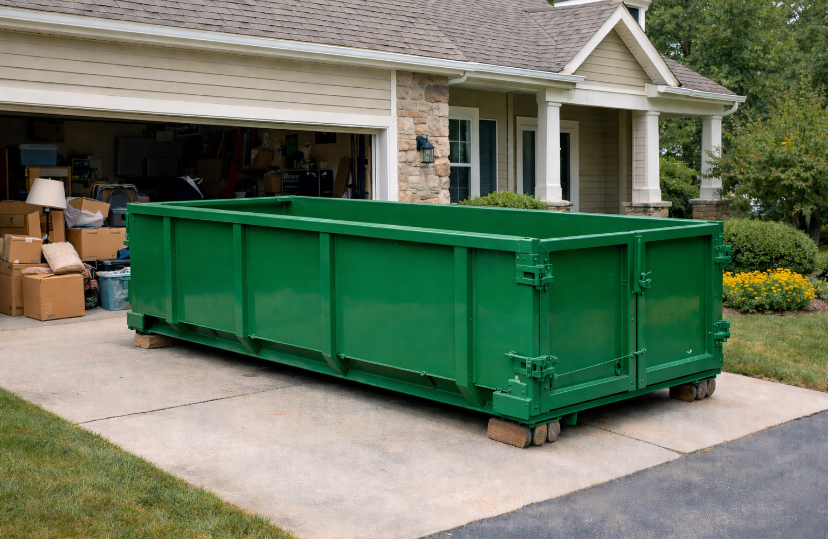
For most whole-house cleanouts, a 20-yard dumpster is the recommended size:
20-yard dumpster capacity: Holds approximately 20 cubic yards (equivalent to 6 pickup truck loads). Dimensions typically 22 feet long × 8 feet wide × 4.5 feet high. Accommodates 3-4 bedroom home cleanouts including furniture, boxes, appliances, and miscellaneous household items [SOURCE: Dumpster rental industry specifications].
When to choose smaller (15-yard): 1-2 bedroom homes, apartments, partial house cleanouts (garage, attic, basement only), or minimal furniture and belongings. Holds 15 cubic yards (4-5 pickup truck loads).
When to choose larger (30-yard): 4+ bedroom homes, estates with heavy accumulation, cleanouts including significant furniture and appliances, or homes with full basements and attics being cleared. Holds 30 cubic yards (9-10 pickup truck loads).
Estimation guideline: Count rooms being cleared × average 2-3 cubic yards per room + large furniture pieces (couch = 3-4 cubic yards, mattress = 2-3 cubic yards, appliances = 2-4 cubic yards each).
For Apopka homeowners: CRM Roll Off provides free sizing consultations—describing your home size, number of rooms, and items being removed allows accurate size recommendations avoiding costly mistakes.
Get sizing help for your cleanout → residential dumpster rental in Apopka.
Understanding Residential Dumpster Sizes
Understanding what size options exist, their physical dimensions, and capacity in relatable terms provides the foundation for making an informed sizing decision.
10-Yard Dumpster
The smallest residential option holds 10 cubic yards (equivalent to 3 pickup truck loads). Dimensions approximately 14 feet long × 8 feet wide × 3.5 feet high. Best for small projects—single room cleanouts, garage clean-outs, or minor renovations. Rarely sufficient for whole-house cleanouts unless dealing with a very small apartment or minimal belongings. Apopka rental cost typically $250-325.
15-Yard Dumpster
Mid-small option holds 15 cubic yards (4-5 pickup truck loads). Dimensions approximately 16 feet long × 8 feet wide × 4 feet high. Handles 1-2 bedroom home cleanouts, partial house cleanouts (attic, basement, or garage), or whole-house cleanouts with minimal furniture and belongings. Popular for senior downsizing or apartment move-outs. Will fit a couch, mattress, plus boxes and miscellaneous items. Apopka cost typically $300-375.
20-Yard Dumpster
The most popular residential size holds 20 cubic yards (6 pickup truck loads). Dimensions approximately 22 feet long × 8 feet wide × 4.5 feet high. Handles 3-4 bedroom home whole-house cleanouts including furniture, appliances, boxes, and miscellaneous items. Accommodates most standard whole-house scenarios. Apopka cost typically $350-450. Provides best value for typical cleanouts—adequate capacity without excess.
30-Yard Dumpster
The largest common residential option holds 30 cubic yards (9-10 pickup truck loads). Dimensions approximately 22 feet long × 8 feet wide × 6 feet high. Handles large homes (4+ bedrooms), estates with heavy accumulation, homes with full basements, attics, and garages being cleared, or cleanouts including significant furniture and appliances. Apopka cost typically $450-550. Necessary for extensive projects but overkill for average cleanouts.
Visual Capacity Reference
One cubic yard equals approximately 3 feet × 3 feet × 3 feet cube. Twenty cubic yards equals enough space to stack twenty 3×3×3 foot cubes. Alternatively, 20 cubic yards roughly equivalent to half a standard moving truck or the contents of a typical 2-car garage filled shoulder-height with items [SOURCE: Waste industry volume estimates].
Factors Affecting Whole-House Cleanout Volume
Understanding what drives debris volume helps you evaluate your specific situation and make more accurate size estimates.
Home Size and Room Count
This represents the primary factor. Each room generates approximately 2-3 cubic yards of debris when fully cleared—furniture, belongings, and miscellaneous items. A 3-bedroom home equals 9-15 cubic yards base volume. A 4-bedroom home equals 12-18 cubic yards. These estimates don’t yet include living room, dining room, kitchen, or common areas. Multi-story homes or homes with basements and attics add significant volume—a finished basement adds 4-6 cubic yards, a full attic adds 3-5 cubic yards.
Furniture and Large Items
Individual furniture pieces consume substantial dumpster space. A couch or sofa equals 3-4 cubic yards. A mattress and box spring set equals 2-3 cubic yards. A dining table with chairs equals 2-3 cubic yards. A dresser equals 1-2 cubic yards. Appliances (refrigerator, washer, dryer) equal 2-4 cubic yards each. A house with typical living, dining, and bedroom furniture easily adds 15-25 cubic yards just from furniture. You cannot compress furniture significantly—it occupies space inefficiently compared to boxes.
Accumulation Level and Belongings Density
Light accumulation (minimalist home, recent move-in, limited storage) means lower multiplier on room count. Moderate accumulation (typical family home, 10+ years residence) equals standard multiplier. Heavy accumulation (lifetime home, collector, multi-generational belongings, packed closets, garage, and attic) means higher multiplier of 1.5-2× standard estimates.
Item Types and Compactability
Boxes, bags, clothing, and linens compress well and fill dumpsters efficiently. Books, dishes, and small household items pack densely. In contrast, furniture, hollow items (plastic bins, toys, odd-shaped items) waste space with air gaps. Appliances and electronics create bulky non-compressible loads. Optimal loads mix compactable items (boxes, soft goods) with large items (furniture), allowing smaller items to fill gaps around furniture.
Scope of Cleanout
Whole-house cleanout (every room cleared to empty) equals maximum volume. Partial cleanout (selected rooms or items) equals proportionally less volume. Estate sale scenarios (valuable items removed, remainder trashed) equal moderate volume. Cleanout plus minor renovation (removing old carpet, fixtures, cabinets) equals higher volume potentially requiring construction dumpster rather than residential cleanout dumpster.
[CRM Roll Off regularly handles Apopka whole-house cleanouts and observes typical volume patterns. We’ve found that homeowners most commonly underestimate furniture volume—forgetting how much space sofas, bedroom sets, and dining furniture actually occupy. For example, a recent 3-bedroom Lake County home cleanout that the homeowner estimated would need a 15-yard dumpster actually required a 20-yard dumpster once all furniture, garage items, and attic contents were accounted for. We provide free consultations describing your specific situation to avoid these costly miscalculations.
Dumpster Size Recommendations by Home Size and Scope
Translating volume factors into specific size recommendations helps you choose confidently based on your home and cleanout scope.
1-2 Bedroom Homes and Apartments (15-Yard Dumpster)
Typically 800-1,200 square feet with 1-2 bedrooms, 1 bathroom, living room, and kitchen. With moderate belongings, a 15-yard dumpster usually proves sufficient, handling furniture (couch, bed, small dining set), boxes, household items, and miscellaneous debris. This size fills to 80-90% capacity when properly loaded. Upgrade to 20-yard if you have heavy furniture (large sectional, multiple bedroom sets, extensive kitchen items) or if a basement or attic is also being cleared. Apartments and condos almost always work with 15-yard unless extensive belongings exist.
3-4 Bedroom Homes (20-Yard Dumpster)
Typically 1,500-2,500 square feet with 3-4 bedrooms, 2-3 bathrooms, living/dining/family rooms, kitchen, and garage. With standard family belongings, a 20-yard dumpster handles whole-house cleanout including all furniture (multiple bedroom sets, living room furniture, dining room, appliances), boxes from all rooms, garage items, and miscellaneous household debris. This represents the most common recommendation for typical Apopka whole-house cleanouts. It provides adequate capacity with a small buffer, filling to 85-95%. Upgrade to 30-yard only if the home has a finished basement or attic being cleared, or unusually heavy accumulation.
4+ Bedroom Homes or Homes with Basements (30-Yard Dumpster)
Typically 2,500+ square feet with 4+ bedrooms, 3+ bathrooms, multiple living areas, and finished basement or extensive attic storage. Large furniture collections and extensive belongings require a 30-yard dumpster to handle volume from clearing all rooms plus basement and attic contents. Alternatively, large estates or homes with decades of accumulation need this size regardless of bedroom count. The capacity accommodates heavy furniture, appliances, and substantial belongings without overflow concerns. The cost difference versus 20-yard ($100-150) proves worth avoiding a second rental.
Partial House Cleanouts
Garage only equals 10-yard dumpster. Attic or basement only equals 15-yard. Two to three rooms plus furniture equals 15-yard. Entire home contents but keeping some furniture and items typically reduces one size from full cleanout estimates. Estate sale remainder (valuables removed, trash and donate items remain) typically runs one size smaller than full cleanout of same home.
Special Scenarios Requiring Size Adjustments
Hoarding situations likely require multiple dumpsters or the largest size available. Cleanout plus carpet removal means adding 1-2 cubic yards per room. Cleanout plus old appliances (multiple refrigerators, water heaters, HVAC units) means adding 2-4 cubic yards per appliance. Homes with extensive yard debris or garage workshop equipment alongside household cleanout require upgrading one size to accommodate mixed debris types.
Common Dumpster Sizing Mistakes to Avoid
Preventing costly errors—renting too small requiring a second rental, or renting too large wasting money—requires awareness of common miscalculations.
Underestimating Furniture Volume
This represents the most common mistake. Homeowners envision furniture compressed or broken down, but furniture occupies substantial space in dumpsters. A couch alone takes 3-4 cubic yards (15-20% of a 20-yard dumpster). Multiple bedroom sets, dining furniture, and living room furniture easily consume 50-60% of dumpster capacity before adding boxes and items. Furniture doesn’t pack efficiently—odd shapes create air gaps wasting space. This error often results from mental comparison to packing a moving truck (where furniture Tetris works) versus a dumpster (where items get tossed and loaded less precisely).
Forgetting Common Areas and Storage Spaces
Homeowners count bedrooms but forget living room, dining room, family room, kitchen, bathrooms, hallways, closets, garage, attic, and basement—these spaces add 30-50% more volume beyond bedroom count. Garages often contain heavy items (tools, lawn equipment, sports gear, holiday decorations, workshop items) adding 3-5 cubic yards. Attics accumulate boxes, seasonal items, and forgotten belongings adding 3-5 cubic yards. Basements—if finished—essentially add another floor to the home’s volume calculation.
Ignoring Appliances and Heavy Items
A refrigerator equals 2-4 cubic yards. A washing machine equals 2-3 cubic yards. A dryer equals 2-3 cubic yards. A water heater equals 1-2 cubic yards. Old HVAC units equal 2-4 cubic yards. A home with typical appliances (fridge, washer, dryer, water heater) adds 8-15 cubic yards to total volume. These items don’t compress and occupy space inefficiently. Homeowners often forget to account for appliances in initial size estimates, then realize during cleanout that appliances consume 30-40% of dumpster capacity.
Assuming “It Will Compress”
While boxes, soft goods, and some items compress, most household debris doesn’t compress significantly once loaded in a dumpster. Hard items (furniture, appliances, electronics) don’t compress at all. Attempting to compact items by driving vehicles over the dumpster or jumping on contents is dangerous and damages dumpsters (not allowed per rental agreements). Realistic packing achieves 10-15% better density than loose loading but doesn’t fundamentally change required size—if estimates indicate 18 cubic yards needed, a 15-yard dumpster won’t work even with perfect packing.
Overcompensating and Wasting Money
Fear of underestimating leads some homeowners to rent 30-yard when 20-yard would suffice, wasting $100-150. While underestimating costs more (a second rental doubles expense), significant overestimating still wastes money. A better approach involves accurate estimation or consulting the dumpster company for sizing recommendations based on specific project details.
[CRM Roll Off has seen both extremes in Apopka. One customer rented a 15-yard dumpster for a 3-bedroom home cleanout thinking they could “make it work” and ended up needing a second 15-yard dumpster, spending $700 total instead of $400 for a single 20-yard. Another customer rented a 30-yard for a 2-bedroom condo cleanout and filled it only 40%, wasting $150. We now emphasize free consultations before ordering—describing your home and items allows our team to provide accurate recommendations avoiding both costly extremes.]
Avoid sizing mistakes with professional sizing recommendation
Apopka Residential Dumpster Rental: Next Steps
Transitioning from sizing education to action involves understanding Apopka-specific considerations and taking concrete next steps.
Free Sizing Consultations from CRM Roll Off
Rather than guessing, homeowners can call and describe their specific situation—home size, room count, furniture being removed, accumulation level—and receive professional size recommendations. Consultations account for variables self-estimation might miss. This avoids costly sizing errors (too small requiring second rental, too large wasting money). No obligation exists—we help homeowners make informed decisions even if they ultimately rent elsewhere. As an Apopka local company, we understand typical home sizes and cleanout patterns in the area.
Delivery and Placement Considerations
Dumpsters require clear delivery paths—driveway, street, or yard area at least 25 feet long × 10 feet wide for truck access. Consider overhead clearance for power lines (trucks require 20+ feet clearance). Apopka street parking often requires permits from the city for dumpsters in public right-of-way. Homeowner associations in some Apopka neighborhoods restrict dumpster placement or require approval—check HOA rules before ordering. CRM Roll Off handles delivery, pickup, and disposal—homeowners load at their pace during the rental period (typically 7-14 days included).
Pricing Transparency and What’s Included
A 20-yard dumpster rental in Apopka typically costs $350-450 including delivery, pickup, disposal fees (up to weight limit, usually 2-4 tons), and rental period (7-14 days). Price variations depend on rental duration, disposal fees for different debris types, and any overages. Upfront pricing prevents surprise charges. Weight limits generally aren’t issues for household cleanouts—furniture, boxes, and belongings prove lighter than construction debris. Most cleanouts fall well under weight limits. Extended rental periods are available if cleanouts take longer than the standard period.
What You Can Dispose Of
Acceptable items include household furniture, clothing, books, boxes, general household items, appliances (some restrictions), carpeting, and small amounts of lumber. Not acceptable items include hazardous materials (paint, chemicals, batteries, electronics with cathode ray tubes), tires, large quantities of yard waste, liquids, and asbestos [SOURCE: Florida waste disposal regulations]. CRM Roll Off provides complete acceptable and prohibited items lists during booking, preventing issues with disposal facilities rejecting loads.
Timing and Scheduling
Book your dumpster 3-5 days before your planned cleanout start to allow delivery scheduling. Ordering too far in advance means paying rental fees while the dumpster sits empty. Cleanout timelines vary—some complete weekend warrior cleanouts in 2-3 days, others work incrementally over 7-14 days. Flexible scheduling allows ordering when ready rather than locking in weeks ahead. For estate cleanouts or time-sensitive moves, communicate your timeline to CRM Roll Off—priority scheduling is available for urgent situations.
Ready to order? Call for sizing consultation or request a quote online.
Choosing the Right Dumpster Size for Your Cleanout
Most Apopka whole-house cleanouts need 20-yard dumpsters for 3-4 bedroom homes with standard belongings. Smaller cleanouts (1-2 bedrooms, partial house) work with 15-yard dumpsters. Larger projects (4+ bedrooms, estates, heavy accumulation) require 30-yard dumpsters. Accurate sizing avoids costly mistakes—renting too small doubles costs when you need a second rental, while renting too large wastes money on unused capacity.
Estimate your needs by counting rooms × 2-3 cubic yards per room, then adding furniture and appliances (couch = 3-4 yards, mattress = 2-3 yards, appliances = 2-4 yards each). Remember that common areas, storage spaces (garage, attic, basement), and appliances add significant volume beyond just bedroom counts. Furniture occupies more space than most homeowners expect and doesn’t compress.
CRM Roll Off provides free sizing consultations removing the guesswork. Describe your project and receive accurate recommendations based on our experience with hundreds of Apopka cleanouts. We help you avoid underestimating (requiring expensive second rentals) and overestimating (wasting money on excess capacity). Our residential dumpsters accommodate everything from 1-bedroom apartments through large estate homes with delivery throughout Apopka and surrounding areas.
Ready to rent a dumpster for your Apopka whole-house cleanout? CRM Roll Off provides free sizing consultations—describe your home size, rooms being cleared, and furniture being removed, and we’ll recommend the perfect dumpster size avoiding costly mistakes. Our residential dumpsters accommodate 1-bedroom apartments through large estate homes with delivery throughout Apopka and surrounding areas. Call (321) 228-0245 for immediate sizing help or request a quote online.